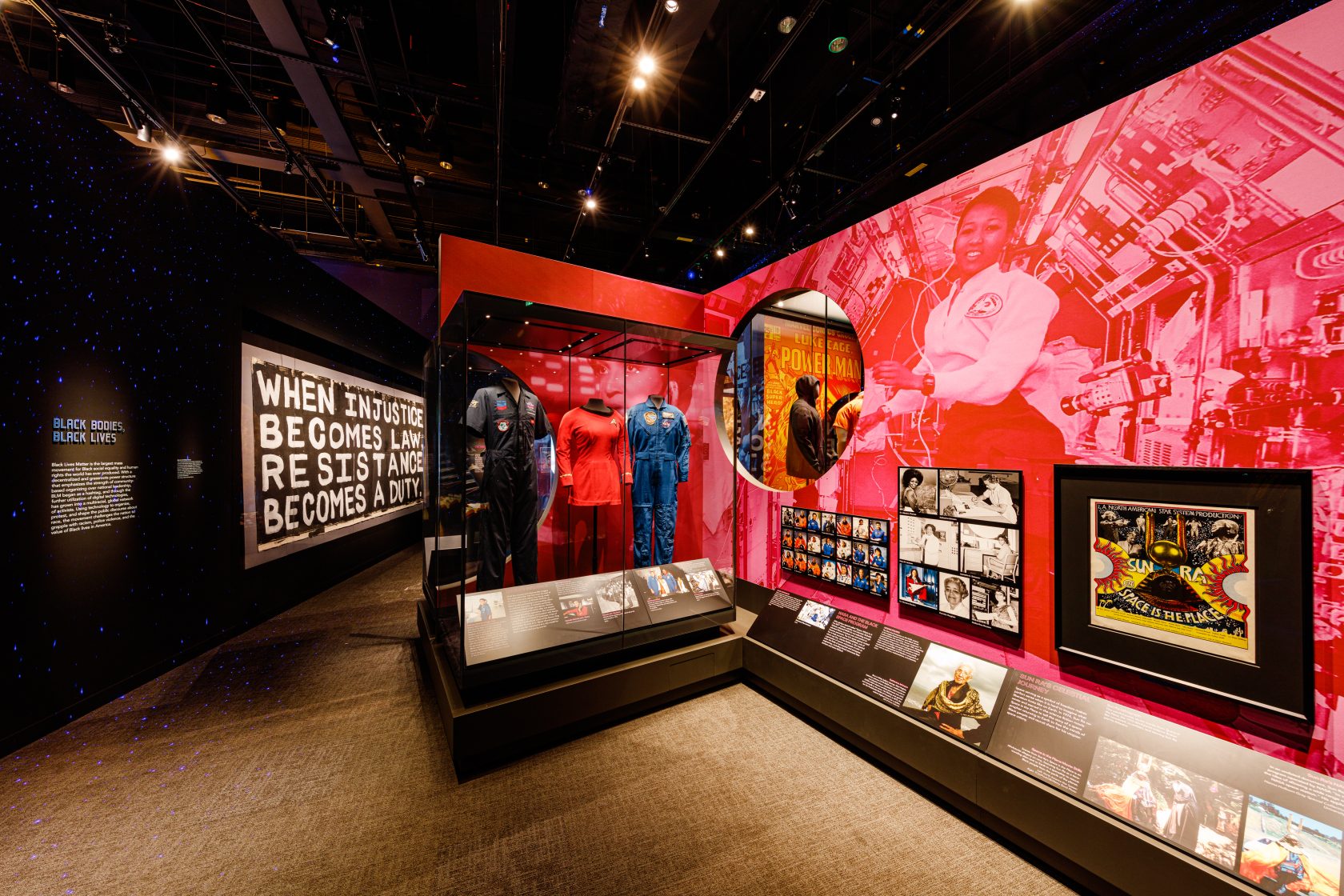
As public-facing institutions, museums and cultural institutions are at the forefront in demonstrating environmental leadership. Over the last few years, this ambition has increasingly permeated through the supply chain, influencing how both exhibitions and the systems supporting them are designed and delivered. Showcases are a prime example of this cultural shift.
For us, at the micro level, the challenge is to delivery measurable environmental improvements, without compromising on the performance of the showcase systems. It has therefore become a central design principle, considered equally alongside performance, conservation, aesthetics and security. It has pushed us to question established ways of working; from carbon-conscious material selection and designing for longevity, to reuse and recycling, or analysis of the impact of transportation or delivery. Earlier this year, for example, we launched our innovative showcase carbon calculator. This enables us to accurately assess the carbon impact of showcase systems, identify opportunities to reduce emissions, and offer museums completely carbon-neutral showcase systems.
On the macro level, we are also witnessing a growing trend and industry wide conversation that is driven by the rising costs of energy, fuel and labour on a global scale. The conversations regarding a potential loosening of building systems control parameters and even at the gallery and showcase level, consideration of loosening the tight parameters on both temperature and relative humidity, with the intention being to find the right balance of operating costs and conservation standards that is safe for collections and prudent for institutions’ budgets.
And while we appreciate the position and empathize over the cost escalation as it relates to fuel, energy and labour costs rising globally, we are seeing a disconnect between museum and gallery operations and conservation and curatorial requirements. Especially when it comes down to loaned exhibitions, blockbuster shows or special events, or even the long-term strategies for collection rotation, the need for very high specification showcases is even more important.
- Ryan Skorch, Vice President