Lighting of objects in showcases is a crucial aspect that can elevate the visitor’s experience, as objects and artefacts are cleverly highlighted and incredible stories are put under the spotlight (pun intended) for the public to immerse within.
Since the introduction of high-quality LED systems that produce a lighting output that is extremely close to solar radiation, described by the famous parameter “Colour Rendering Index” (CRI), the offering of LED products of any form and shape has dramatically increased, answering a great deal of needs and unique scenarios that were previously difficult to obtain using fibre optic based systems or halogen lamps.
The main advantage of modern LED diodes is the fact that they need very little electrical input to transform it into a focusable visible light, and this high efficiency leads to another great deal of benefits, with the main one being the reduced power consumption, leading to a reduced environmental footprint and lower bills for the operator. Less current means also smaller units and thus increased flexibility for the end user, as each LED spotlight could serve a very specific purpose, like illuminating a very specific section of an object that needs a certain lighting colour from a certain angle, to make that single small diamond shine…
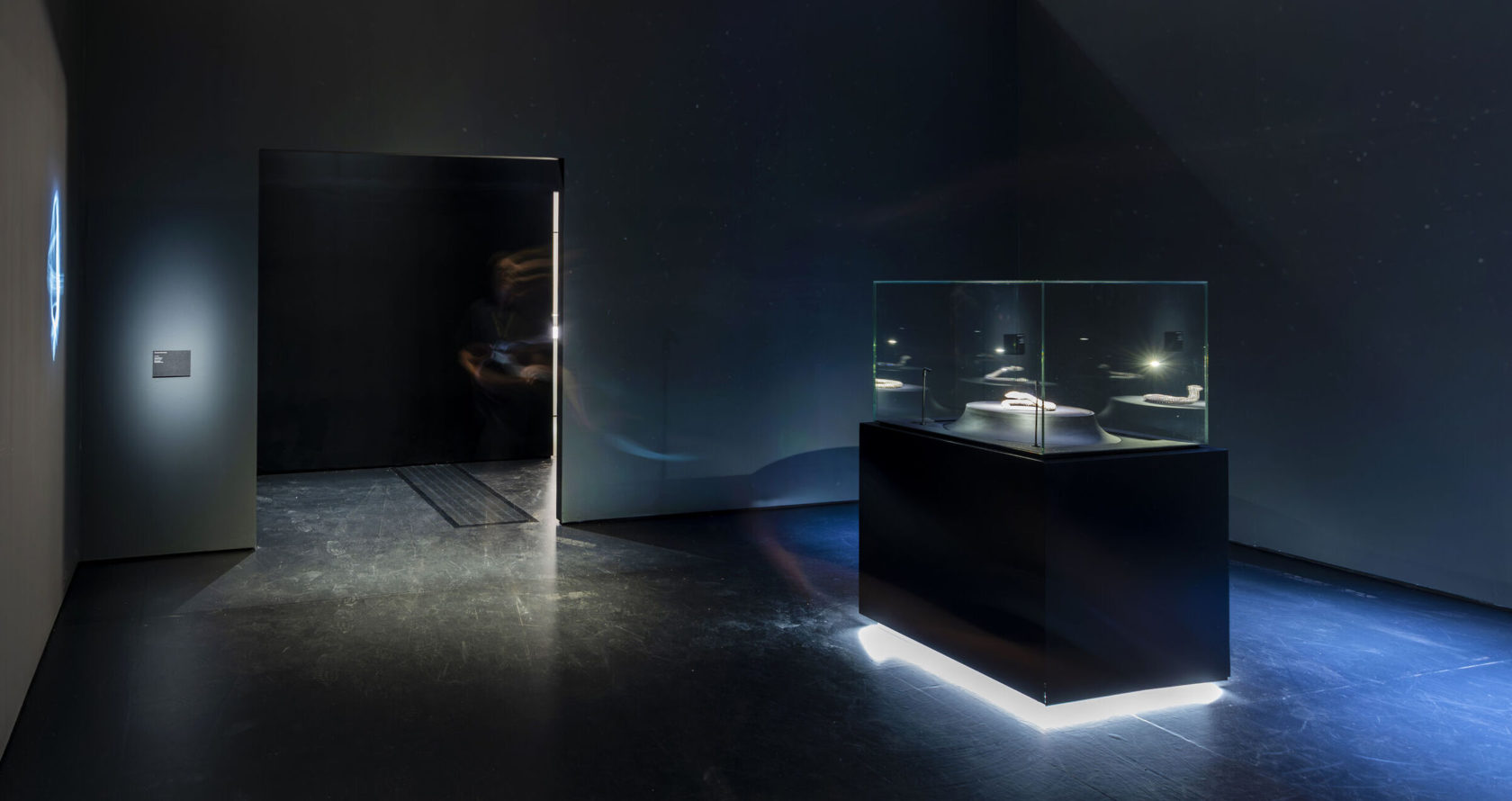
This ad-hoc focusing was possible with technologies that were established many years ago, like fibre-optics, however this system is always limited by the number of tails that are available or that can be fitted within a showcase structure.
The availability and technological developments in compact and flexible LED systems have indeed influenced the sizes and overall design of the showcase structures, as now track lighting or LED tapes can be embedded within extremely thin structures, “disappearing” into the showcase and leaving only the artefacts lit for the public to be experienced.
It has been noticed how museums are now leveraging on these new products, preferring flexible and interchangeable lighting systems over static spotlights, giving the end user a great freedom in choosing the best lighting for the objects, thus having the showcase adapting to the exhibition, and not vice versa.
This feature is even more valuable in temporary or travelling exhibitions, where artefacts are changed often or the environmental lighting changes and a static lighting system does not elevate the display anymore.
Some showcases are even specified with digitally controlled lighting systems, to constantly modify and adapt the lighting output dynamically, obtaining incredible cinematic effects that can elevate the interaction with the public.
The development of lighting systems and showcase design are deeply linked with each other, new compact lighting solutions push the boundaries of showcase design, and museums and designers are well aware of the great variety of solutions that the market now offers.
We, as showcase manufacturers, expect that the trend of lighting tracks with movable spotlights will become even more common across showcase designers, as the possibility of tailoring the lighting set-up to the exhibition without invasive changes to the showcase is extremely valuable for the end user.
- Roberto Bianchin, Technical Manager